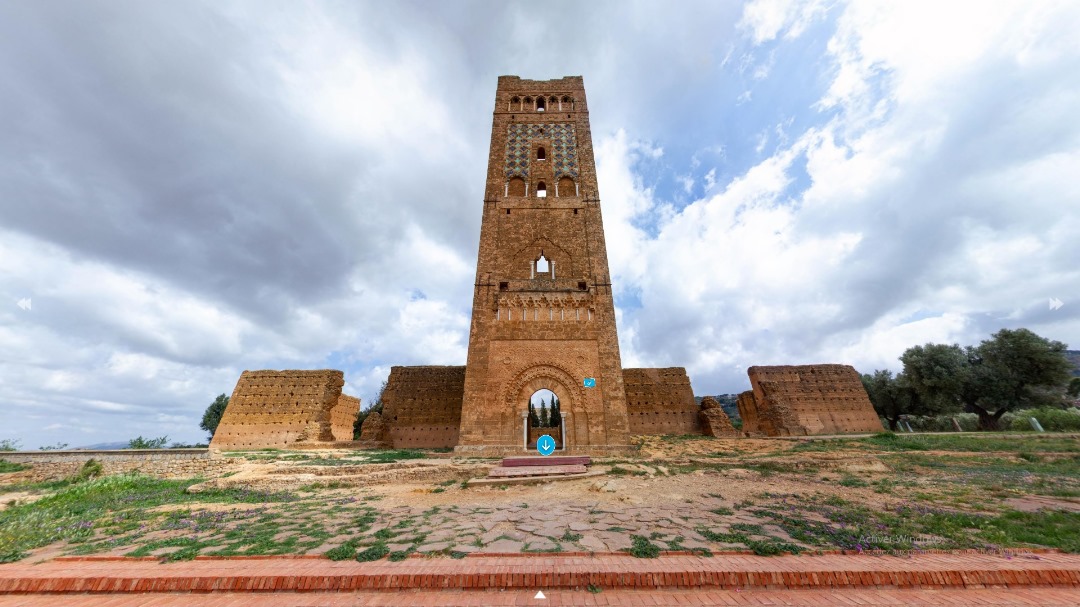
TIN TAGHIRT



Description of the project
The Tin Taghirt rock engraving, located in the Dider region, represents a significant example of Saharan prehistoric art.
Carved into the natural rock surface, it depicts human and animal figures along with symbolic motifs that reflect the lifestyles, beliefs, and environmental context of ancient populations.
This site highlights the cultural and historical richness of the Sahara through a lasting artistic expression, offering valuable insight into early human interaction with the landscape over thousands of years.
The Tin Taghirt engraving stands as an exceptional heritage site, emphasizing the importance of preserving Algeria’s rock art legacy.
Video of the project
The Resting Gazelle
This engraving shows a gazelle lying calmly, its slender limbs, refined head, and natural proportions rendered with precise, controlled lines. The stillness of the pose suggests careful observation rather than movement, capturing both the elegance of the animal and the prehistoric artist’s attention to detail. Gazelles were common in Saharan rock art, reflecting a time when the region had open grasslands and abundant wildlife, and highlighting the close relationship between humans and fauna in the prehistoric Sahara.
The image of the gazelle on the 1000 DA banknote demonstrates its continued cultural significance. Beyond its archaeological and artistic value, it has become a symbol of Algerian heritage and identity, linking the prehistoric landscape and its wildlife to the modern nation and its sense of continuity with the past.
Bovine Head
This engraving shows the head of a large horned animal, possibly cattle or buffalo, with strongly emphasized horns giving it a powerful presence. The focus on the head highlights the animal’s most expressive and symbolic features.
Bovines were central to Saharan pastoral societies, representing wealth, status, and social identity. This depiction transforms the animal into a symbol, reflecting the close relationship between humans and domesticated fauna in prehistoric Sahara.
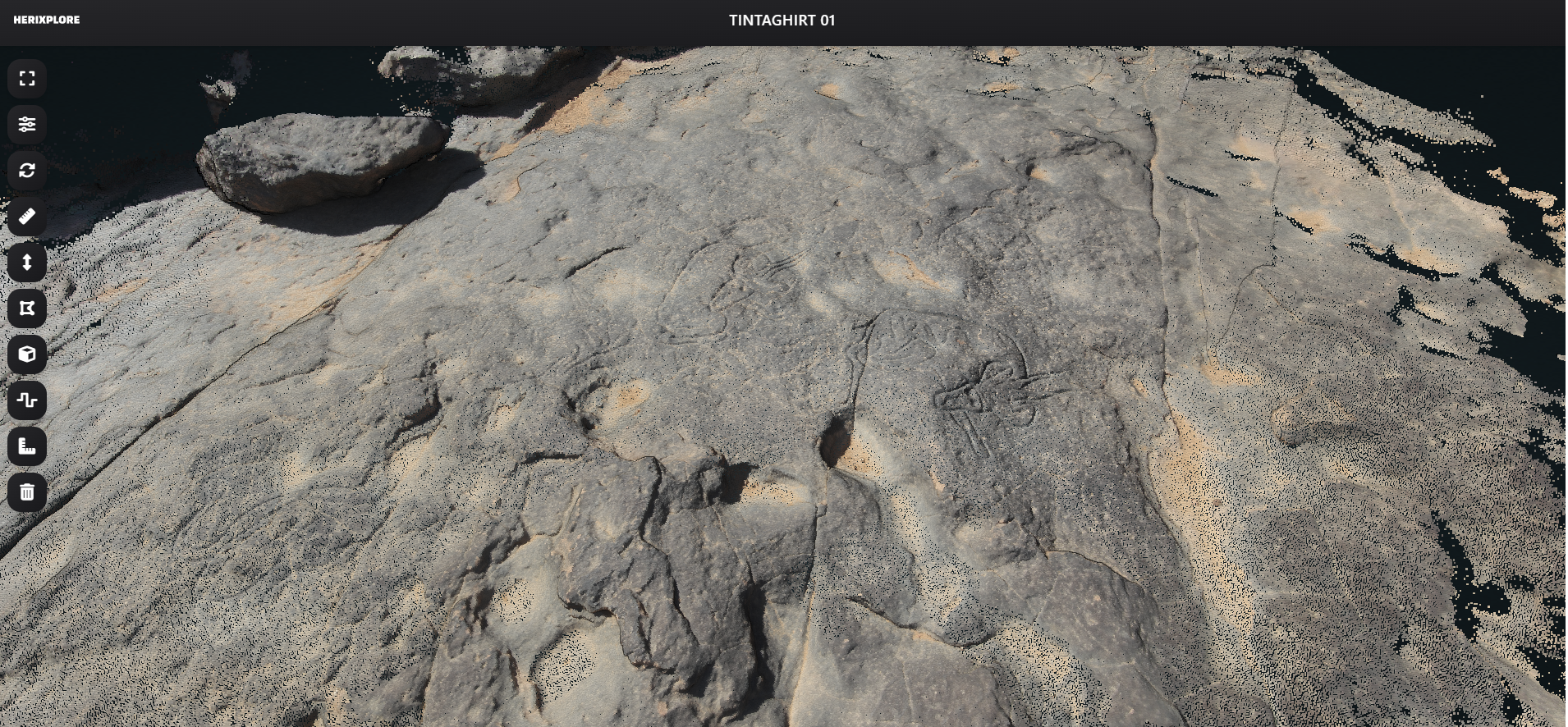
TIN TAGHIRT point cloud
The point cloud of the Tintaghirt engraving provides an extremely precise and faithful 3D representation of the artwork. It accurately captures the engraved details, subtle surface variations, and the overall composition with remarkable precision.
This digital model reveals fine elements such as contours, textures, and proportions, offering a comprehensive view of the engraving from every angle. As a result, it becomes a valuable resource for visualization, artistic analysis, documentation, and long-term cultural preservation.
 Open Potree viewer
Images Gallery